

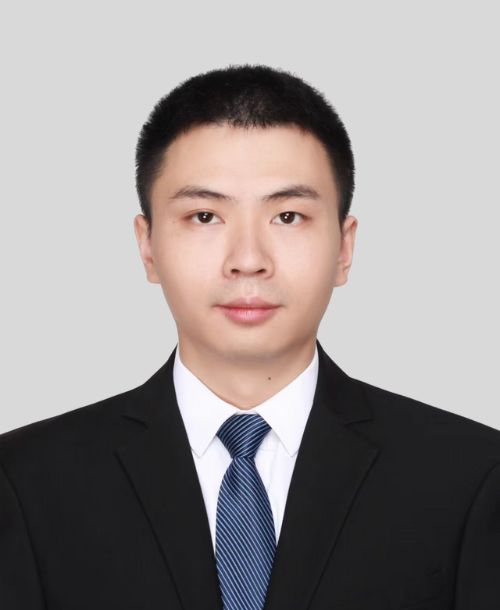
His current research focuses on global vegetation change and its eco-hydrological effects.
BACKGROUND INFORMATION
Feng Yu is an Associate Professor at the Eastern Institute of Technology, Ningbo. His research centers on global vegetation dynamics and their ecological and hydrological impacts. He has authored more than 50 peer-reviewed papers, including 24 as first or corresponding author, and his work has accumulated over 3,900 citations on Google Scholar. Several of his findings have been featured as cover articles and highlighted papers, including in Nature Sustainability; his research has also been incorporated into supporting materials for FAO reports and has received broad coverage from domestic and international media outlets such as China Science News, Mongabay, and The Guardian. He was recognized among the World’s Top 2% Scientists in 2023–2025. His bachelor’s, master’s, and doctoral theses received Excellent/Best Dissertation Awards from Sichuan University, the Chinese Academy of Agricultural Sciences, and the University of Hong Kong, respectively.
RESEARCH FIELD
His current research focuses on global vegetation change and its eco-hydrological effects.
EDUCATIONAL BACKGROUND
2018-2022: PhD (Water and Environmental Engineering), The University of Hong Kong
2015-2018: M.S. (Agricultural Soil and Water Engineering), Graduate School of the Chinese Academy of Agricultural Sciences
2011-2015: BS (Agricultural Water Conservancy Engineering), Sichuan University
WORK EXPERIENCE
2023-Present: Associate Professor, Eastern Institute of Technology, Ningbo
2022-2023: Postdoctoral Fellow, Laboratoire des Sciences du Climat et de l'Environnement, France.
ACADEMIC EXPERIENCE
Associate Editor, Frontiers in Remote Sensing.
AWARDS AND HONORS
2023: National Young Talents Program
2023: Li Ka Shing Prizes, The University of Hong Kong
He has published more than 50 SCI papers, with a total citation of more than 3600 and an H-index of 33 (Source: Google Scholar).
Google Scholar: https://scholar.google.com/citations?user=2pJ66KkAAAAJ&hl=en
10 Representative Works (* refers to the corresponding author, # refers to the equal contribution)
1. Feng, Y., et al. 2024. Global patterns and drivers of tropical aboveground carbon changes, Nature Climate Change 14: 1064-1070.
2. Wu, J.#, Feng, Y.#, et al. 2024. Earth greening mitigates hot temperature extremes despite the effect being dampened by rising CO2, One Earth 7: 100-109.
3. Feng, Y., et al. 2022. Doubling of annual forest carbon loss over the tropics during the early twenty-first century. Nature Sustainability 5: 444-451
4. Feng, Y., et al. 2021. Upward expansion and acceleration of forest clearance in the mountains of Southeast Asia. Nature Sustainability 4: 892-899.
5. Feng, Y., et al. 2020. Machine learning models to quantify and map daily global solar radiation and photovoltaic power. Renewable and Sustainable Energy Reviews 118: 109393.
6. Feng, Y., et al. 2021. High-resolution assessment of solar radiation and energy potential in China. Energy Conversion and Management 240: 114265.
7. Feng, Y., et al. 2019. Evaluation of temperature-based machine learning and empirical models for predicting daily global solar radiation. Energy Conversion and Management 198: 111780.
8. Wu, J., Feng, Y.*, et al. 2023. Dense flux observations reveal the incapability of evapotranspiration products to capture the heterogeneity of evapotranspiration. Journal of Hydrology 622: 129743.
9. Wu, J., Feng, Y.*, et al. 2022. Assessing evapotranspiration observed from ECOSTRESS using flux measurements in agroecosystems. Agricultural Water Management 269:107706.
10. Feng, Y., et al. 2018. National-scale assessment of pan evaporation models across different climatic zones of China. Journal of Hydrology 564: 314-328.

